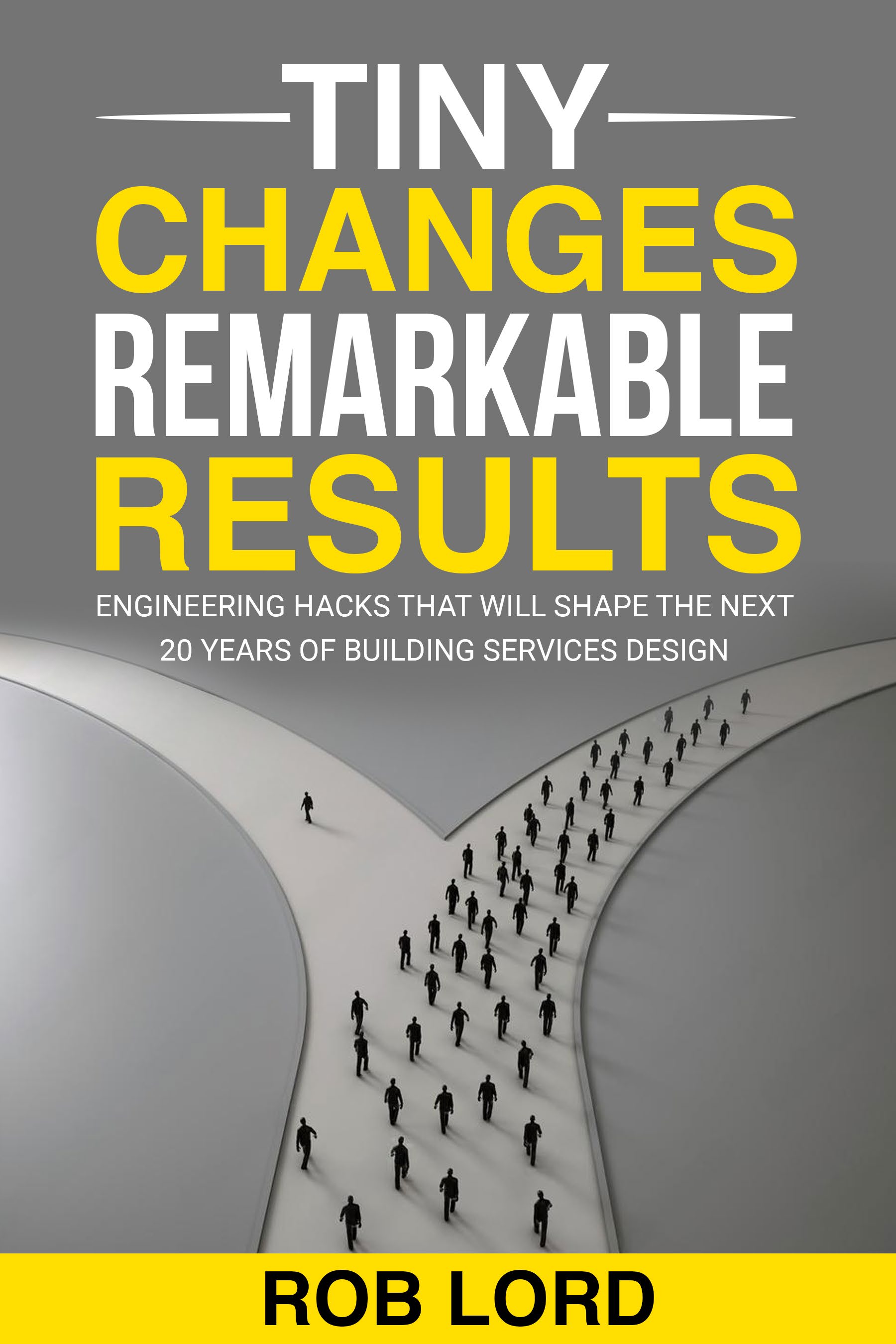
Free eBook — Building Services Design
Tiny Changes,
Remarkable
Results
Engineering hacks that will shape the next 20 years of building services design — without increasing your budget.
Rob Lord — SEED Engineers P/L
100% Free. No credit card required.
Trusted by 100+ construction teams across Australia.
20+
Years experience
100+
CLIENT HELPED
3
PROVEN TECHNIQUES
THE PROBLEM
Developers Are Leaving Money on the Table
Every day, decisions are made too late, assumptions go unchallenged, and projects lose
money before a single brick is laid.
Problem 01
Design decisions keep slipping later
Services are treated as something that "fits later" — until they don't. Ceiling heights shrink, bulkheads appear, and intent erodes one compromise at a time.
Problem 02
Unchallenged assumptions compound risk
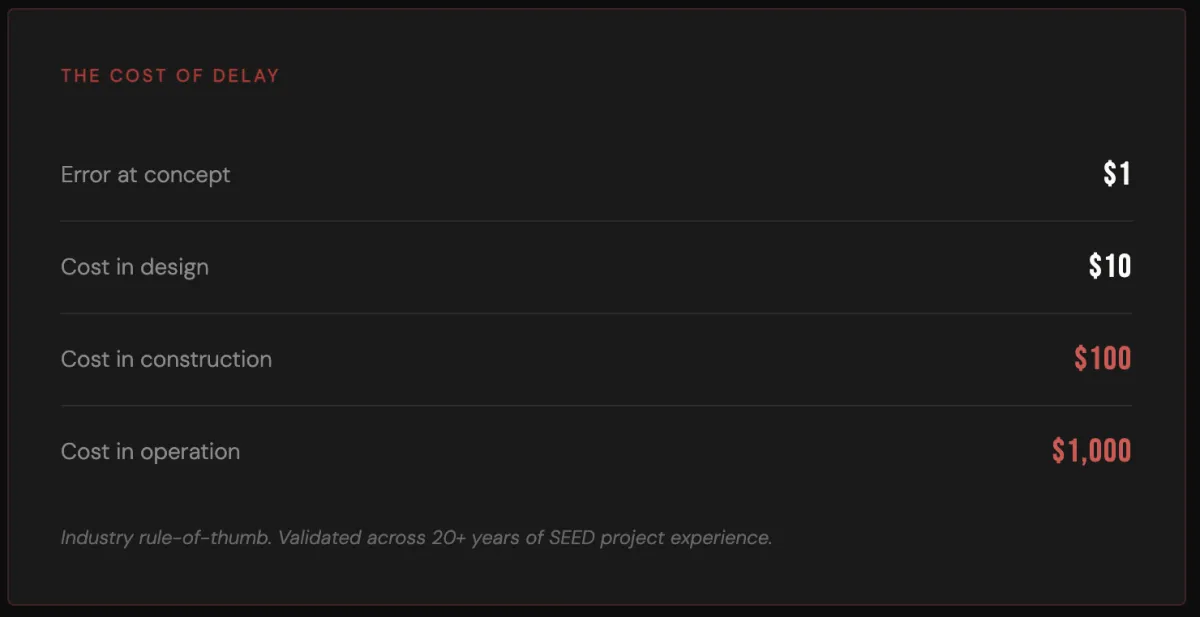
A $1 error at concept stage costs $10 in design, $100 in construction, and $1,000 in operation. Most failures aren't technical — they're assumptions nobody questioned early enough.
Problem 03
Cost overruns kill predictability
Global construction averages 20–50% cost overruns. Investors and buyers don't just want quality — they want certainty. Predictability is rare. And rare things command a premium.
Inside the eBook
What You'll Discover
1
3 simple techniques to deliver a great project
Even if you're not sure where to start — these tried-and-tested approaches work regardless of project type or scale.
2
The 3 most costly mistakes developers make
A single one of these errors could cost you thousands of dollars and set you back months. Most developers make all three.
3
3 insider secrets to restore project performance
In as little as 3 weeks. Number two surprises almost every developer we work with — and it changes everything.
4
The truth about why most developers fail
And the single shift in how you engage your engineering team that protects profitability from day one.
3 Techniques
Small Changes. Serious Results.
These aren't theory. They're the precise, repeatable moves that the best developers use to deliver on time,
on budget, and on quality.
Define "Memorable" Before Design Starts
Lock in 3 non-negotiable project qualities at the outset. The ability to influence cost and performance is highest at the beginning — and drops rapidly after that.
01
Focus on Decisions That Multiply Value
Not all design decisions are equal. Some protect today's cost. Others position you to command tomorrow's premium. Learn which lever to pull and when.
02
Collapse Assumptions Early
Developers don't reduce risk by transferring it — they reduce it by eliminating uncertainty upfront. One spatial coordination study at concept stage prevents a structural redesign at construction.
03
3 Mistakes
What's Quietly Costing You
These errors compound silently. By the time they're visible, they're expensive.
01
Treating services as something that "fits later"
Architecture is drawn. Structure is sized. Planning is submitted. Then someone asks, "Where are the ducts going?" — and peace dies. Ceiling heights shrink, bulkheads appear, and the project slowly becomes a compromise of the original vision.
02
No client-side owner for the project narrative
Without a "Narrative Owner" actively defending the building's intent, each small substitution feels reasonable in isolation. Collectively, they produce a building that feels generic — and generic buildings don't command a premium.
03
Locking architecture before resolving systems
Façade fixed. Core fixed. Marketing drawings released. But the plant strategy? Unconfirmed. The riser sizing? Unvalidated. This is not efficiency — this is optimism that shows up as cost overrun later.
3 Insider Secrets
What the Best Developers Know
Secrets picked up over 20+ years of construction industry practice. These are the moves that separate the developers who build great reputations from those who don't.
SECRET 01
Design decisions keep slipping later
Services are treated as something that "fits later" — until they don't. Ceiling heights shrink, bulkheads appear, and intent erodes one compromise at a time.
SECRET 02
Reputation is built on predictability — not promises
Investors and buyers don't just want quality. They want certainty, delivery, and no surprises. The developers who build enduring brands lock scope early, escalate risk before it escalates cost, and close coordination gaps before procurement. Reputation is simply the memory of predictability.
SECRET 03
The smartest developers buy clarity — not just design
A $10,000 specialist study at concept stage can prevent $500,000 in construction cost later. Most developers see specialist input as a cost line. The best see it as risk compression — small, early intelligence gathering that creates massive downstream stability.
About SEED Engineers
13 Years. 100+ Projects. Real Results.
SEED Engineers — Sustainability by Engineering, Environment by Design — was built on a single conviction: that building services engineering, done right from the start, is the most reliable lever a developer has for protecting profitability.
We've helped 100+ clients deliver improved profitability without the years of trial and error most developers suffer through. Our approach is direct, deliberate, and grounded in 30 years of real project experience.
This eBook is a distillation of what we've seen work — consistently — across project types, scales, and delivery models.
13+
Years in the industry
50+
Clients with improved profitability
100+
Clients with improved deliverability
3 wks
To restore project performance
Get Your Free eBook
Delivered Instantly
SEED Engineers
"For the life of the building."
© 2026 SEED Engineers — All rights reserved.
Privacy Policy · Terms & Conditions · Contact Us